Transport general
Incorrect fines for using the new tachograph
• 3 min read
From 21 August 2023 the mandatory integration of the Smart Tacho 2 into newly registered vehicles will apply. These new functionalities have in some cases led to unjustified fines at border crossings.
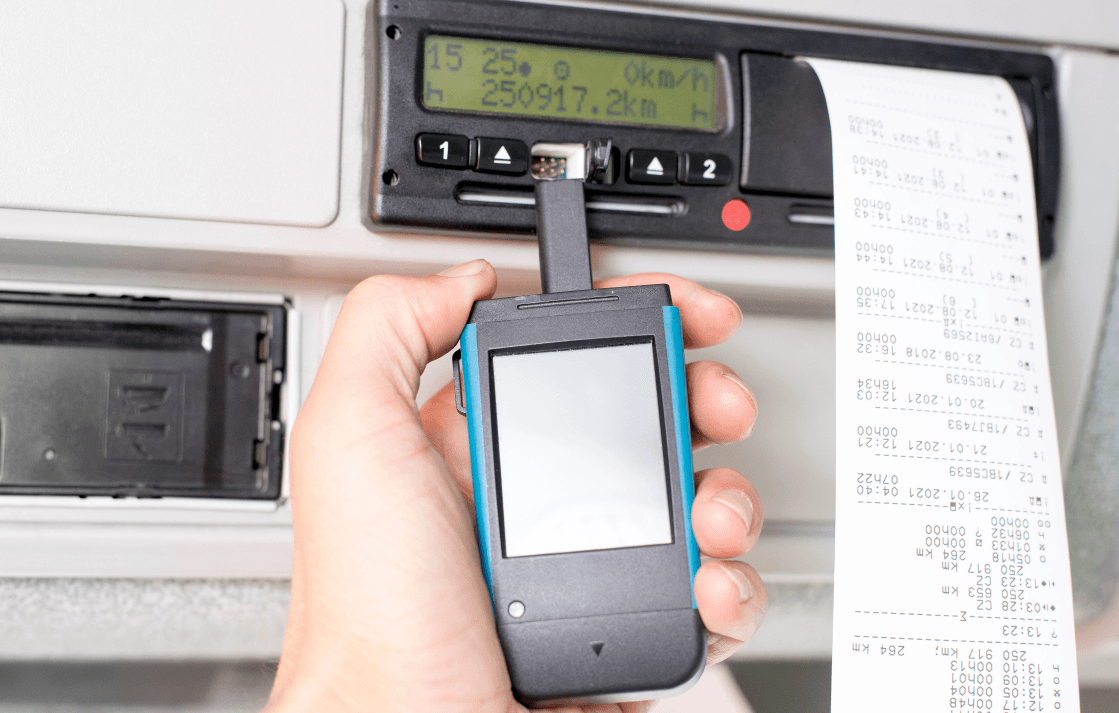
From 21 August 2023 the mandatory integration of the Smart Tacho 2 into newly registered vehicles is in force. The Smart Tacho 2 will not only serve the maintaining driving and rest periods, but will also be used to enforce cabotage and posting. New functionalities have been added, including the automatic recording of border crossings. Unfortunately, in some cases this new functionality has led to unjustified fines at border crossing points.
Unfortunately, in some cases this new functionality has led to unjustified fines at border crossings.
It is important to note that these automatic border crossings are only fixed on the from end of July 2023 delivered G2V2 Driver Cards and not on older driver cards. Nevertheless, these automatic border crossings are recorded in the memory of the Smart Tacho 2 itself. During an inspection, the enforcement authorities may consult this information in the tachograph. However, this can form a challenge for enforcers when a driver alternately drives vehicles without Smart Tacho 2. In situations where the driver uses a digital tachograph or a Smart Tacho 1, he will need to enter manual country codes to register border crossings.
There is concern that insufficient knowledge are of the differences between the new and old driver cards, which could lead to (unfair) fines. However, it is important to stress that such fines no legal status can keep, as drivers fully comply with European regulations when they do not register border crossings manually when using a Smart Tacho 2. This is also one of the advantages of the Smart Tacho 2. It is currently not possible to bypass a request new driver card to avoid this problem, as this can only happen when the old card is no longer valid, damaged or lost/stolen.
The European Commission is currently investigating whether these rules temporary relaxation, but this would not solve the problem completely unless all drivers are required to request a new card. However, this is not considered an acceptable solution unless these cards are provided free of charge and even then the question remains whether a large-scale replacement is feasible and feasible. Transport and Logistics Netherlands (TLN) raised this problem a long time ago within the enforcement community in Brussels, both through the International Road Transport Union (IRU) and through the Conference of European Road Transport Enforcement (CORTE).
In the coming period this problem will be further discussion and there will be search for a solution for enforcement.