Transport general
Diesel prices in Europe are soaring: pre-financing as a temporary solution
• 4 min read
Rising diesel prices in Europe are putting pressure on transport operators, making pre-financing and strategic refuelling increasingly important for liquidity and cost control.
A new price shock on the European diesel market
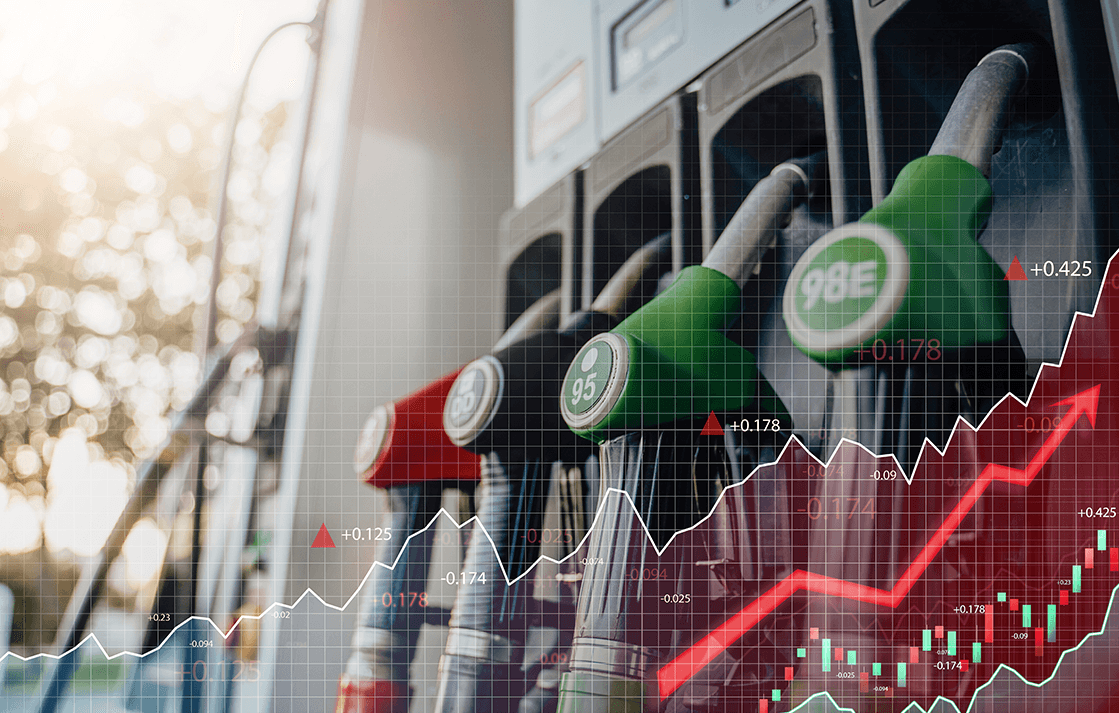
Diesel prices in Europe have risen abruptly in recent weeks. The main cause lies in escalating geopolitical tensions in the Middle East, which have pushed oil prices up rapidly. Fuel prices respond to this almost immediately.
Since the tensions flared up, the diesel price in Europe has risen by tens of cents per litre in a short period, and according to market analysts this increase may continue if uncertainty on the energy market persists.
For transport operators, this means a sudden and substantial increase in costs. While diesel prices were already volatile before, this rise is hitting the transport sector faster and harder.
The first impact: a liquidity problem
The rising diesel price affects transport operators not only in terms of margin, but above all in terms of liquidity. Fuel has to be paid for immediately, while revenue from transport often only follows weeks later.
The sector is already talking about millions of euros in additional pre-financing that companies must provide in order to keep their fleets on the road. Larger transport operators with many vehicles in particular feel this impact directly in their working capital.
Pre-financing as a temporary liquidity solution
One possible solution that is being used increasingly often is the temporary or structural pre-financing of foreign VAT and excise. This means a transport operator does not have to wait for the refund timelines of foreign tax authorities, which can often take months.
At Delta, we make this possible as the only party in the market by offering pre-financing flexibly. In practice, this means that pre-financing can easily be switched on or off, similar to turning a light switch on or off, depending on a company's liquidity needs.
Buying diesel where it is cheaper
A sudden price increase like this also makes something else clear. Structurally refuelling in the Netherlands is becoming increasingly difficult to justify for many transport operators.
Fuel prices differ significantly across Europe. In Belgium, the diesel price is structurally lower than in the Netherlands, mainly due to differences in excise duties. For transport operators, this means that strategic refuelling in neighbouring countries can directly generate substantial savings.
There is more. When diesel is purchased in Belgium, Belgian excise can in many cases be reclaimed. This further reduces the effective price per litre. At present, the reimbursement of overpaid excise in Belgium amounts to € 0,1913 per litre of diesel.
In many situations, it turns out that even when excise refunds are pre-financed, the final diesel price is still considerably lower than in the Netherlands, even compared with bulk purchases for, for example, a pump on a company's own premises.
From cost item to strategic decision
The current price shock shows that fuel purchasing is no longer a purely operational decision. It is becoming a strategic part of cost management within transport companies, in which both liquidity and the place of fuel purchase play an increasingly important role.
Even though this situation may stabilize over time and purchase prices may normalize again, the reality is that the world remains under structural tension. Geopolitical events follow one another rapidly, and one new incident can once again push energy prices out of balance.
This requires transport operators to adopt policies that do not only respond to today's situation, but that structurally choose solutions that remain effective during the next price shock as well.
Where it may once have been a matter of convenience to refuel mainly in the Netherlands, the difference with neighbouring countries can no longer be ignored. In a sector with thin margins, failing to optimize fuel purchasing will ultimately make the difference between profit and loss. This is influenced not only by where diesel is purchased, but also by how intelligently liquidity is managed, for example by using pre-financing of VAT and excise.