Excise background
Which fuels qualify for VAT and excise duty refunds in Belgium?
• 4 min read
Not every fuel qualifies for excise duty refunds in Belgium. This overview shows which fuels do and do not qualify, and why.
Not every fuel results in an excise duty refund
As a general rule, VAT is always reclaimable, though sometimes only partially. For fuel costs of M1 vehicles (passenger cars), the VAT deduction is 35%, and for N1 vehicles (light commercial vehicles) this is 85%. This article focuses solely on excise duty refunds.
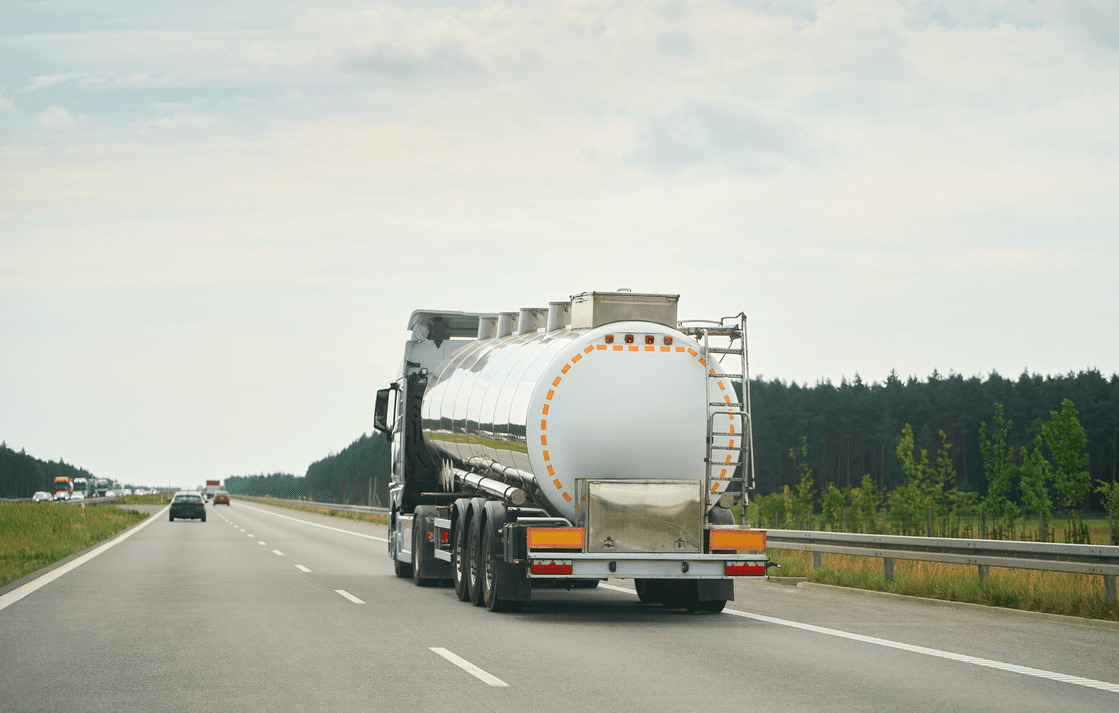
Whether a fuel qualifies for an excise duty refund depends on two factors: the excise duty rate applied to the fuel, and the type of vehicle for which the fuel is used. Only vehicles heavier than 7.5 tonnes and vehicles of category M2 and M3 are eligible. Fuels that fall outside the legal definition of the refund scheme, or that are primarily used in vehicles outside these categories, do not qualify.
Eligible for refund
Diesel (regular diesel)
Regular diesel is the most common fuel for which excise duty can be reclaimed. It is the standard fuel for heavy road transport and forms the basis of the Belgian refund scheme for professional carriers.
Renewable diesel (HVO and HVO100)
HVO and HVO100 fall under the same refund scheme as conventional diesel. These fuels are chemically almost identical to gas oil and are used as a direct replacement in diesel engines. An excise duty refund is possible.
Red diesel (VAT only)
Red diesel is permitted in Belgium as a fuel for powering refrigeration units on trucks. However, an excise duty refund is not possible: red diesel is subject to a lower excise duty rate than regular diesel, which means the conditions for an excise duty refund do not apply.
Using red diesel as a regular driving fuel for a vehicle constitutes a criminal offence in Belgium. Its correct use is exclusively as a fuel for refrigeration units.
Not eligible for refund
LNG and Bio-LNG
LNG and Bio-LNG are subject to a considerably lower excise duty rate than diesel. As a result, there is no basis for the Belgian government to introduce an excise duty refund scheme for these fuels.
Hydrogen
Under Belgian law, hydrogen is only subject to excise duty when it is used as motor fuel, as an additive, or as a filler in motor fuels. In vehicles equipped with a fuel cell, where hydrogen is not directly combusted as motor fuel but converted into electricity, no excise duty is levied. There is therefore no excise duty to reclaim.
Electric vehicles (EV)
Electricity is subject to a different tax framework in Belgium than motor fuels. The professional excise duty refund scheme applies exclusively to gas oil and therefore falls outside the scope of electricity as an energy carrier for vehicles.
AdBlue
AdBlue is not a fuel but an exhaust gas treatment fluid based on urea. It therefore falls entirely outside the excise duty refund scheme.
Petrol (gasoline)
The professional excise duty refund scheme in Belgium is legally limited to gas oil (diesel) used by vehicles heavier than 7.5 tonnes and M2 and M3 vehicles. Petrol falls outside this legal definition and therefore does not qualify for a refund.
Overview
| Fuel | VAT reclaimable | Excise duty reclaimable |
|---|---|---|
| Diesel | Yes | Yes |
| HVO / HVO100 | Yes | Yes |
| Red diesel | Yes | No |
| LNG / Bio-LNG | Yes | No |
| Hydrogen | Yes | No |
| Electric (EV) ★ | Yes | No |
| AdBlue | No | No |
| Petrol ★ | Partial | No |
★ Petrol and electric (EV) are primarily used in M1 vehicles (passenger cars, VAT deduction 35%) and N1 vehicles (light commercial vehicles, VAT deduction 85%). These energy carriers are not currently common in heavy vehicles over 7.5 tonnes or M2/M3 vehicles. Please consult your adviser for the VAT deduction applicable to your situation.
Get professional support
The rules surrounding excise duty refunds in Belgium are specific and not always straightforward. Delta Refund Solutions helps you determine which fuels qualify in your situation and ensures a correct and complete submission. Feel free to contact us — we are happy to help.