Excise background
Ownership, Rental or Lease for Belgian Excise Refunds: What You Need to Know
• 4 min read
For Belgian excise refunds, the ownership structure of a vehicle determines which supporting documents must be submitted with the application.
What does the scheme involve?
When submitting a Belgian excise refund application through the PDIE2 application, you must specify the ownership structure for each vehicle.
The Belgian tax authorities distinguish between three categories:
- Ownership
- Rental
- Lease
The category you choose directly affects the documentation you must provide. Incorrect information or missing documentation may lead to rejection of your application.
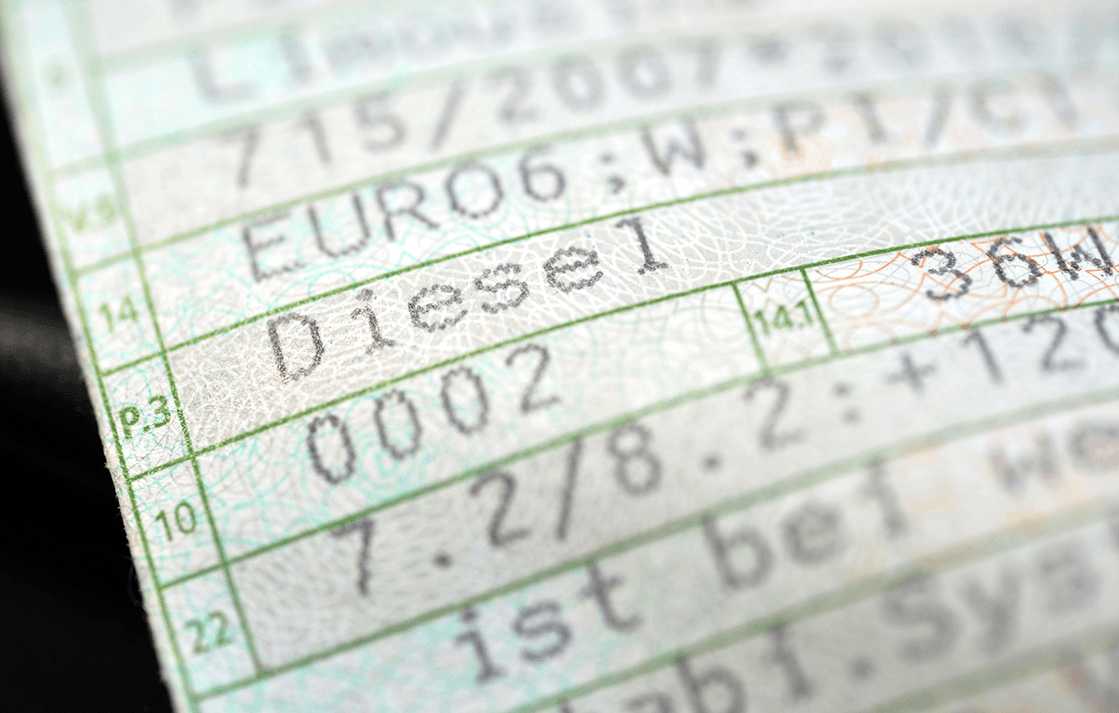
A vehicle only qualifies as ownership when the name on the registration certificate exactly matches the name of the permit holder.
When is a vehicle considered ownership?
A vehicle only falls under the ownership category when the name on the registration certificate exactly matches the name of the permit holder.
If this is not the case, ownership as a category does not apply, regardless of the underlying ownership relationship.
A vehicle that is legally owned by a holding company, fleet management company or another entity within the same group is not considered ownership within the meaning of the PDIE2 declaration.
In all these situations, you must declare the vehicle as rental or lease and include the corresponding agreement.
Rental or lease
The distinction between rental and lease follows the legal structure of the agreement.
Operational lease and financial lease fall under the lease category. All other situations where the vehicle is not registered in the name of the permit holder, including intra-group structures, fall under rental.
For both rental and lease, a written agreement must be included with the application.
This agreement must be written in Dutch, German or French. If this is not the case, a sworn translation is required.
The agreement must contain at least the following information:
- Name of the renter
- Name of the lessor
- Chassis number and/or registration number of the vehicle
- Rental price
- Start date of the agreement
- Duration of the agreement (an indefinite period is permitted, but must be explicitly stated)
- Date of signing
- Place of signing
- Signature of the renter
- Signature of the lessor
Missing one of the mandatory elements in the agreement may result in rejection by the Belgian tax authorities.
Combined lease and rental structure
In practice, it is common for a vehicle to be externally financed through a financial lease by a holding company, which then rents the vehicle internally to the permit holder carrying out the transport activities.
In this case, both the lease agreement and the internal rental agreement must be submitted.
Within the PDIE2 declaration, you must classify the vehicle as lease.
Important: date of latest registration change
An important point of attention is that the start date of the rental or lease agreement must correspond with the date of latest registration as stated on the vehicle registration certificate.
If the entity managing the vehicle undergoes a name change, the registration certificate will also be updated, resulting in a new registration date.
From that date onwards, a new agreement is required. The previous agreement is no longer valid, even if it was originally drafted correctly.
This is a common issue during restructurings or company name changes within a group.
It is therefore important to immediately verify whether existing rental and lease agreements still correspond with the current registration details of the vehicles.
Let professionals guide you
A common mistake is declaring ownership while the vehicle is registered under a different legal entity. This almost always results in rejection.
Delta Refund Solutions assists you in correctly classifying your vehicles and, where necessary, drafting compliant internal rental agreements that meet all Belgian requirements.
Feel free to contact us, we are happy to help.